Application · Insole bonding
Solvent-free insole bonding: tape, hot melt or cold
Kyotex offers three ways to bond insoles without solvent-based shoe cement: pressure-sensitive insole adhesive tape, hot melt powder or film, and the K Next cold line. We'll help you choose the one that fits your line.
Why take solvents out of insole bonding
With conventional shoe cement, the adhesive is brushed or sprayed on wet, and operators wait for the solvent to flash off before pressing. That solvent ends up in the plant air as volatile organic compounds (VOCs), drives ventilation requirements and adds time to every cycle.
Kyotex takes the opposite approach: clean, immediate insole bonding with no ovens, no open flames and no solvent flash-off. Because insole bonding happens on every pair, it's a practical first step toward eco-friendly adhesives across the whole line.
Three routes to solvent-free insole bonding
1. Insole adhesive tape (K System)
K System pressure-sensitive adhesives are solid, work cold and activate under pressure. The tape is applied to the material ahead of time; at the bonding station, operators place the insole and press. Because the adhesive film is already formed, it can be applied today and bonded later.
2. Hot melt powder or film (K Thermo)
K Thermo hot melt adhesives melt with heat, are pressed and set as they cool. According to Kyotex, insole bonding is where powder hot melts perform at their best; the powder range includes TPU, PES, PBS — a biodegradable option — and EVA.
3. Cold insole bonding (K Next)
K Next is designed for parts that need hot melt strength but can't be heated. ALC introduced it as a polyurethane-based adhesive tape for structural bonding.
Choosing the right technology
There's no single best option. The decision usually comes down to four questions:
- Can your material take heat? If not, you're choosing between K System and K Next.
- Do you already run heated presses? If so, a hot melt can put them to use.
- How strong does the bond need to be? A comfort sock liner and a structural bond have different requirements.
- What's your volume? Application equipment is sized to your pairs per shift.
We walk through the process in how to remove solvents from insole bonding, and for heat-free processes in cold insole bonding: what it is and when to use it.
Machinery for applying insole tape
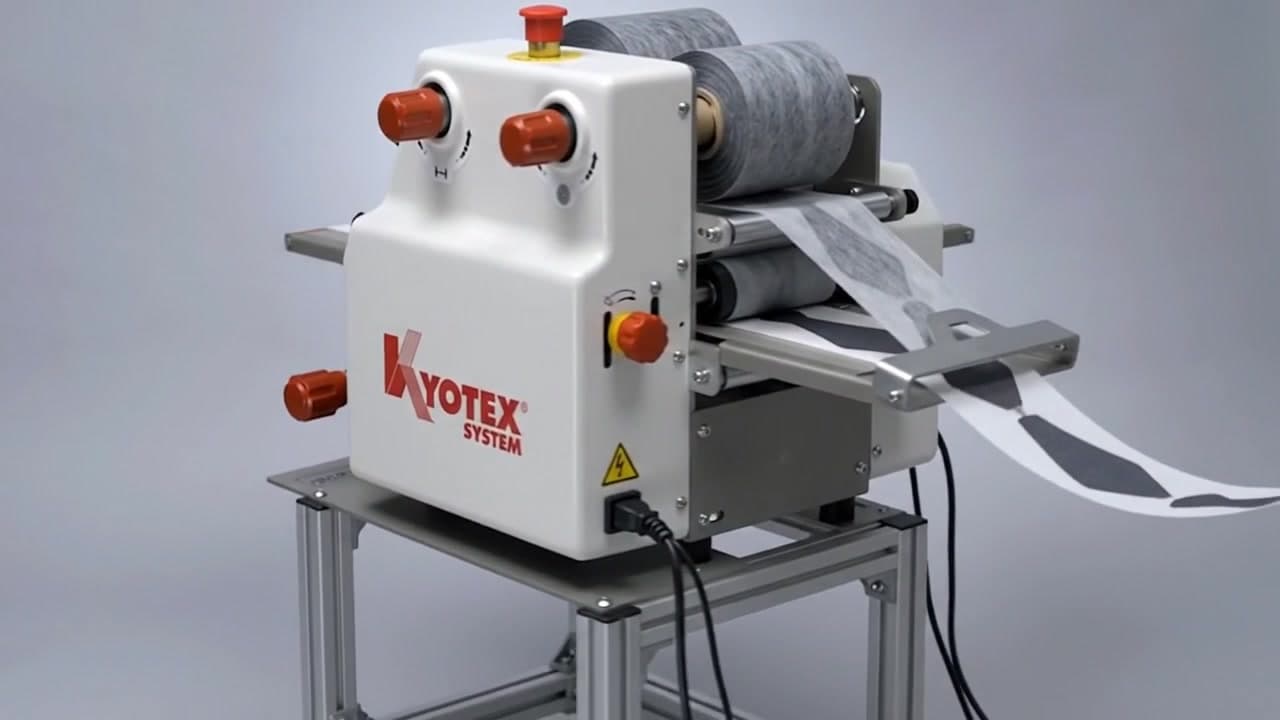
Kyotex insole adhesive tape is applied with two Kyo machines:
- KYO100S: a pneumatic machine for self-aligning application of Kyotex PSA adhesives up to 145 mm (about 5.7 in) wide.
- KYO101: an electronically controlled machine for self-aligning application of Kyotex PSA adhesives up to 145 mm (about 5.7 in) wide.
Both are designed together with the adhesive, so the system is calibrated as one unit. See the full lineup on our shoe machinery page.
Serving the US, Canada and Mexico
Kyotex-Terlan North America is based in Guadalajara, Mexico, and works with footwear manufacturers in the United States, Canada and Mexico.
Tell us which insoles you make, the materials and your volume, and a Kyotex specialist will send you a recommendation. You can request a quote or browse the FAQ.
Related systems
Pressure-sensitive tapes
PSA tape systems for clean, immediate insole bonding — no ovens, no open flames and no solvent flash-off.
Explore K System K ThermoEco-friendly hot melts
Heat-activated adhesive films designed to cut VOC emissions on the line without giving up bond strength.
Explore K Thermo K NextCold bonding technology
The bond strength of a hot melt, applied without direct heat — built for high-output production cells.
Explore K NextRelated guides
How to remove solvents from insole bonding
The three alternatives to solvent-based cement, how to choose between them and how to switch step by step.
Read the guide GuideCold insole bonding: what it is and when to use it
How to bond insoles without heat, with PSA tape or K Next, and when it beats hot melt.
Read the guide GuideWhat is a PSA adhesive, and how is it used in footwear?
How pressure-sensitive adhesives bond, where they're used in footwear and leather goods, and their limits.
Read the guideWant to test a Kyotex system on your line?
Tell us what you bond and at what volume, and a Kyotex specialist will send you a recommendation.
Or call us at +52 33 3645 0272