Guide
How to reduce VOC emissions in a shoe factory
In a footwear plant, a large share of volatile organic compounds comes from solvent-based cements, cleaners and finishes. This guide lays out a five-step plan to cut them, starting where it usually matters most: replacing solvent in bonding operations.
Published · 4 min read
What VOCs are and where they come from
Volatile organic compounds (VOCs) are carbon-based chemicals that evaporate easily at room temperature. In footwear manufacturing they come mostly from solvent-based products:
- Cements for insole bonding, lasting, sole attaching and assembly.
- Primers and halogenating agents used to prepare surfaces.
- Cleaners and solvents for washing tools and equipment.
- Inks, paints and finishes.
Every time a container is left open or a coat of cement goes on, some of that solvent ends up in the plant air.
Why it's worth reducing them
- Worker health. Breathing solvent vapors day after day is a risk for the people on the line. In the US, OSHA sets permissible exposure limits for many common solvents.
- Safety. Most of these solvents are flammable, so less solvent on the floor means less fire risk.
- Air quality. VOCs contribute to ground-level ozone and smog, which is why the US EPA and state and local air agencies regulate them.
- Compliance. Some states and air districts, notably in California, limit the VOC content of adhesives; in Canada, federal and provincial rules apply. Check what applies to your facility.
- Customers. Some brands ask their suppliers how they manage the chemicals they use.
- Odor. Less solvent on the floor also means less solvent odor throughout the plant.
Step 1: inventory your solvents
You can't reduce what you don't measure. List every solvent-containing product that comes into the plant and, for each one, note:
- Which operation uses it.
- How much you buy per month, in gallons or pounds.
- What its Safety Data Sheet (SDS) and technical data sheet say about solvent or VOC content and hazards.
A simple spreadsheet is enough: one row per product, with the operation, monthly use and solvent content from its data sheets.
Sort the list from highest to lowest use. It's common for a handful of operations to account for most of the solvent — that's where to focus.
Step 2: substitute wherever there's an alternative
Of all the measures available, removing solvent from an operation is the most effective, because VOCs that never enter the plant don't need to be controlled later. These are the substitutions Kyotex offers:
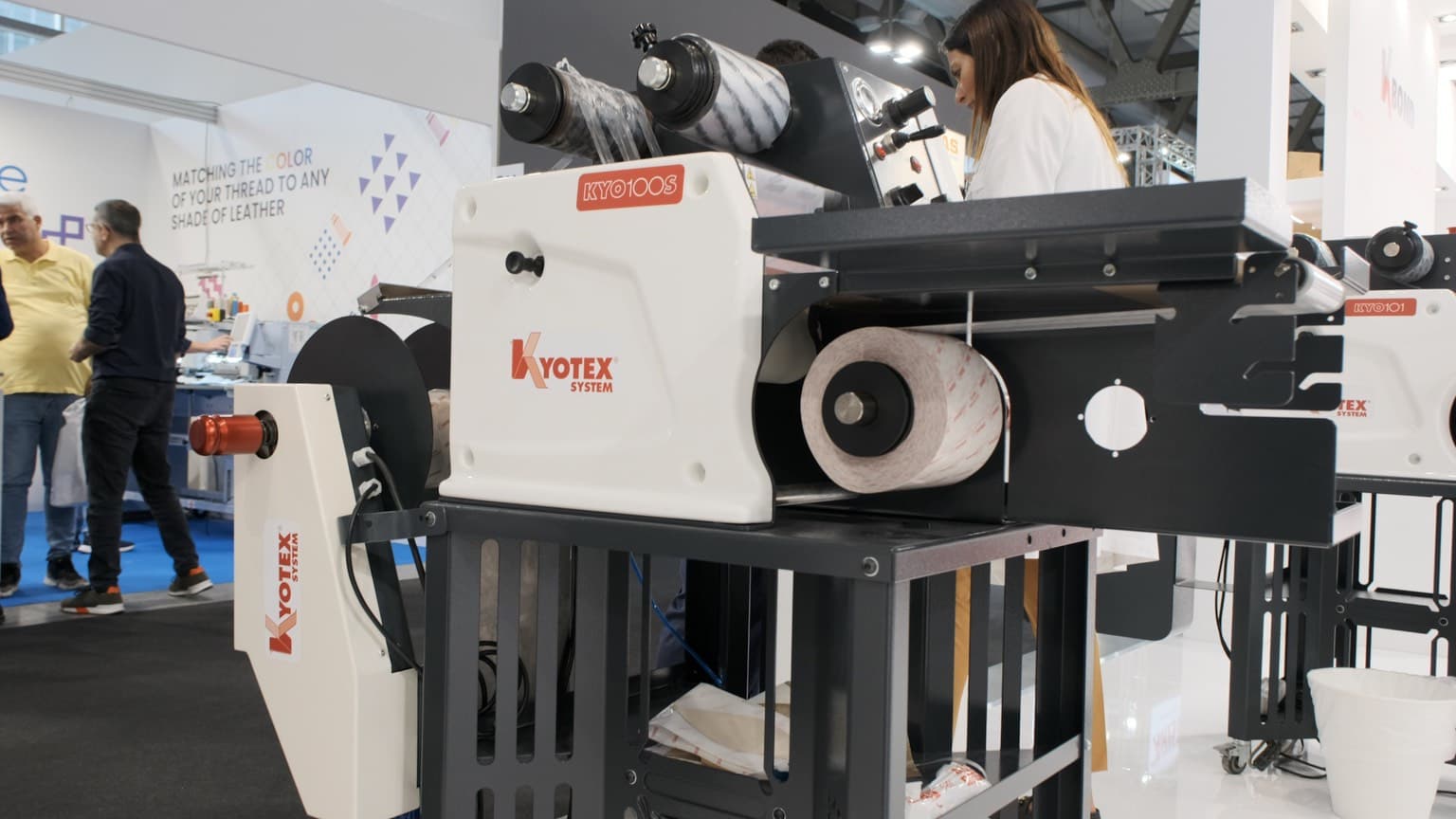
- Insole bonding: PSA insole adhesive tape (K System), hot melt powder or film (K Thermo) or cold bonding (K Next). See solvent-free insole bonding.
- Reinforcements: K Pads toe puffs, counters and microfibers, made from materials treated with Kyotex adhesives that, according to the brand, ensure no solvents and no VOCs.
- Lamination: hot melt film, web, net or powder. See lamination.
- Leather goods: PSA tapes and hot melts. See leather goods adhesives.
Start with the highest-use operation that has a clear alternative, and pilot it before converting the whole line. If a substitution could affect how a product looks or performs, involve your customer early — especially when they specify materials or methods. How to remove solvents from insole bonding walks through the process.
Step 3: reduce and control what's left
Some operations will still need solvent for a while. There, good practice helps:
- Keep containers closed when they're not in use.
- Issue only the cement needed for the shift.
- Use applicators that put down just the right amount.
- Make sure bonding stations have proper ventilation and local exhaust.
- Train operators in safe solvent handling.
- Store flammables in a designated area.
- Clean up spills promptly and keep solvent-soaked rags in closed containers.
Step 4: measure progress
Purchasing is the simplest indicator: if monthly use of solvent-containing products drops, so do the VOCs entering the plant. Back it up with:
- Gallons of cleaning solvent used per month.
- Worker exposure monitoring, if your plant does it.
- Emissions testing by a qualified lab when a regulator or customer asks for it.
Share progress with the team regularly; visible results help keep the change going.
Step 5: build it into the process
VOC reductions stick when they become part of how the plant works: put them in your procedures, in new-operator training and in how you select materials. Every new style is a chance to design it with eco-friendly adhesives from the start.
Review the inventory at least once a year, and whenever a new product comes into the plant, so progress doesn't slip over time.
Common mistakes
- Relying on ventilation alone. Exhaust improves the air at the station, but the solvent still leaves the building; substitution fixes the problem at the source.
- Switching products without testing. A new adhesive has to be validated with your materials before it goes line-wide.
- Forgetting the cleaners. Cleaning solvent counts too, and it's sometimes a big share of total use.
- Leaving purchasing and quality out. Purchasing controls what enters the plant and quality validates changes; without them, the plan stalls.
- Skipping the baseline. Without a starting measurement, you can't show how much use came down.
Where to start with Kyotex
To compare technologies, read hot melt vs. solvent-based shoe adhesive. When you're ready for a recommendation for your plant, request a quote: a Kyotex specialist will review your operations and suggest where to begin.